
Why a Data Breach Won't Stop Me From Traveling (And It Shouldn't Stop You, Either)
Data breaches are a modern reality, but they shouldn't ground your travel plans. In this post, I break down the recent Carnival cybersecurity event, separate the real risks from the noise, and discuss the minor price we pay for participating in a globalized world.

I received a letter from Carnival Corporation yesterday.
It was a notice of a cybersecurity event. On April 14, 2026, an unauthorized actor used social engineering to access a limited portion of their IT systems. By April 22, the company confirmed that personal information had been copied. My name, address, email, phone number, and passport number were among the data obtained.
Two clients reached out to ask what it means.
Here's my honest answer.
This happens more than you think
Data breaches are not a travel industry problem. They are an everyone problem. Healthcare networks, banks, retailers, airlines, hotel chains — the list of companies that have issued notices like this one is longer than most people realize. If you have been a customer of a major corporation at any point in the last decade, some version of your personal information has almost certainly been exposed somewhere.
That is not fatalism. It is context.
What this breach actually exposed
Name, address, email, and phone number? That data has been in circulation for years. It is available in dozens of places most consumers never think about. The exposure of that information in this breach does not meaningfully change your risk profile.
The passport number is worth paying attention to. It is not a financial credential — it cannot be used to open an account or make a transaction. But it is a government-issued identifier that does not change often, and it has specific misuse potential in identity fraud scenarios. It is the one item in this notice that warrants a concrete response.
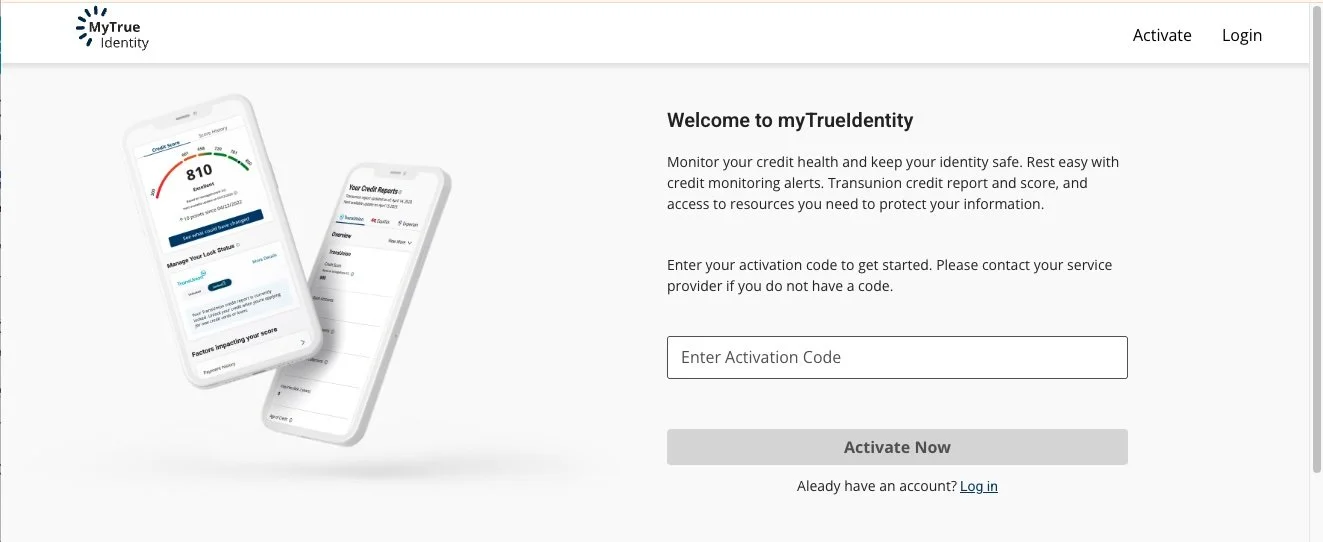
Credit Monitoring Sign Up Screen
What to actually do
Carnival is offering a complimentary 24-month TransUnion credit monitoring membership. Enroll. The deadline is August 31, 2026. It takes ten minutes, it costs nothing, and it gives you two years of visibility into whether your information is being used in ways it should not be.
The enrollment site is mytrueidentity.com. Carnival sent instructions and your personal activation code directly to impacted individuals. Refer to that email for everything you need to complete enrollment.
Check your passport expiration date. If you are within a year or two of renewal anyway, moving that timeline up resets the document number. It is worth noting — and worth acting on. I renewed my own passport last week. I will share more on that process once it arrives, but the online renewal option made it straightforward.
Continue the maintenance you should already be doing: monitor your account statements, review your credit report periodically, and rotate passwords on any accounts where you have not done so recently.
What not to do
Do not panic. Do not pay for credit monitoring services you did not ask for — there are companies that will try to capitalize on breach notices by selling you something you are already being offered for free.
And do not ignore the notice entirely. Complacency is understandable. I have received enough of these letters over the years to have grown accustomed to them. But accustomed is not the same as dismissive. Read it, take the steps that make sense, and move on.
The bigger picture
Travel requires trust. You hand your passport to a customs officer. You give your credit card to a hotel. Your information lives in booking systems, airline databases, and cruise line platforms. That exposure is the price of participating in the world.
The advisors and travelers who manage this well are not the ones who never get breach notices. They are the ones who respond proportionally — act on what matters, ignore what does not, and get on with the trip.

Billy Miller is the founder of Miller Travel Group. He believes true vacation planning requires real human relationships and actual local expertise—which is exactly why he is rarely found sitting at home. He writes about premium travel, cruise industry realities, and destination hidden gems from a deeply personal, experiential perspective.