
MSC Cruises: My Honest Take After Nine Years
This is the full reference breakdown — tiers, dining, loyalty, booking reality, all of it. It's information-forward by design and built for the reader who's seriously evaluating MSC before booking. If you'd rather start with the story of why I recommend this line in the first place, that's a shorter read — and probably the better place to begin.
[Start there: Galveston Just Got a New Ship. Let Me Introduce You to an Old Friend. → https://www.millertravelgroup.com/why-stay-home/galveston-new-ship-msc-seascape]
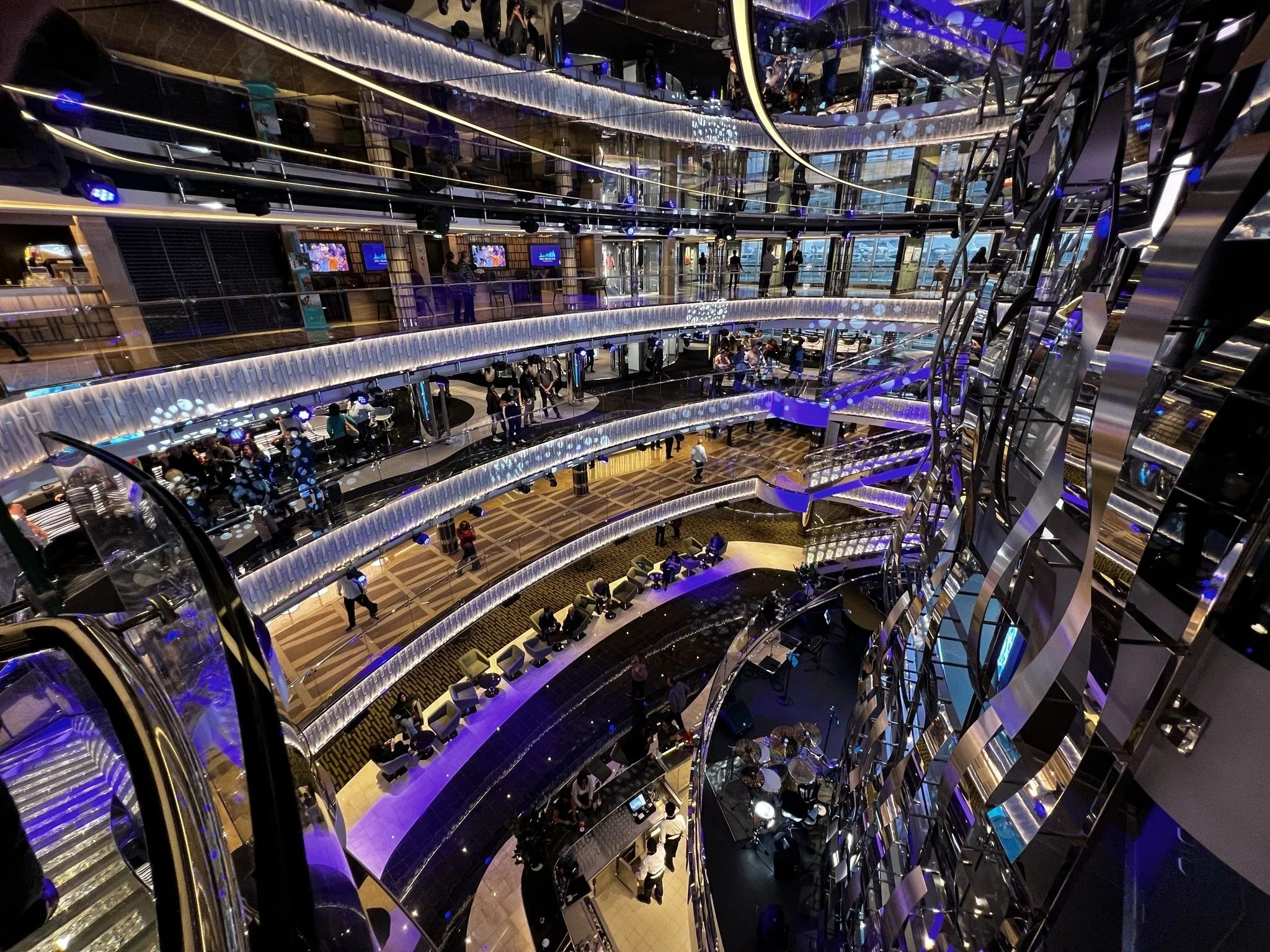
Grand Atrium on MSC Seascape
I've been booking and sailing MSC Cruises since 2017. Nine years of firsthand sailings, client bookings, policy conversations, and a formal invitation to New York Harbor for the naming of MSC Seascape in December 2022. I know this line well — the good, the complicated, and the genuinely great.
Here's my honest take on who should be sailing MSC, who shouldn't, and why the answer matters more with this line than almost any other.
Is MSC Right for You?
Let me give you the filter before I give you the details.
MSC is probably your line if:
You want a genuinely beautiful ship at a price point that undercuts comparable experiences on Celebrity or Norwegian. You appreciate an international onboard culture that feels different from the American-dominant atmosphere on Carnival or Royal Caribbean — and you find that interesting rather than inconvenient. You're a relaxed traveler whose ideal cruise involves a great chair, good food, and an elevated environment without the frenetic energy of the party-forward lines. You want Yacht Club — one of the best luxury concepts in cruising — at a price that makes it accessible rather than aspirational. You're traveling with kids and want serious, invested family programming without paying a premium tier to access it.
MSC is probably not your line if:
You're booking on price alone without understanding what each tier actually includes. You expect the flexibility and policy exceptions you might get from Royal Caribbean or Celebrity when something goes sideways after booking. You want a casino loyalty program that rewards frequency and spend the way the major American lines do.
The version of MSC that disappoints people almost always comes down to one thing: the wrong traveler in the wrong tier, making the decision based on the fare rather than the fit. I'll come back to that.
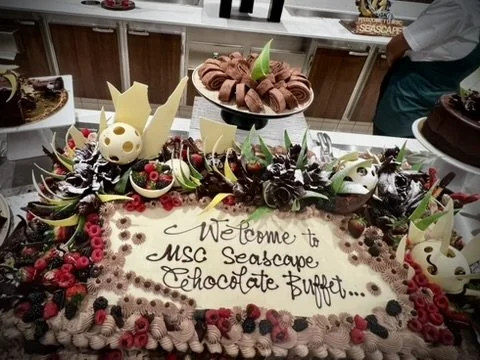
Centerpiece of the Chocolate Buffet.
Think Airlines Before You Think Cruise Lines
The single most useful framework I've found for explaining MSC to a new client is the airline analogy, because MSC has structured their product along almost exactly the same lines.
Bella is Basic Economy. You get on the ship, and that's largely where your input ends. Your cabin is assigned at the cruise line's convenience — no selection, no location preference, no guarantee beyond the category you booked. Dining times are assigned the same way. Room service carries an extra delivery fee, and even a continental breakfast delivered to your cabin costs additional. Bella is a legitimate product for the traveler who genuinely doesn't care about any of those variables and wants the lowest possible entry price. It is the wrong product for the traveler who books it because it was cheapest and assumes the experience will be the same as a higher tier. That traveler ends up frustrated, and every bit of that frustration was preventable.
Fantastica is Main Cabin. Preferred dining windows with real choice in the matter, though the schedule is still structured rather than fully open. You also get to choose your cabin — not from the preferred inventory that Aurea accesses, but your selection, your choice, rather than whatever the ship assigns. The experience starts feeling like it belongs to you rather than to the ship's logistics department. This is where most travelers who want a solid MSC experience without a significant upgrade investment should land.
Aurea is Premium Economy, and it's where I've sailed personally. Anytime dining in a dedicated section of the main dining room — no assigned times, no negotiating a table that works for someone else's schedule. Spa access is included. Your cabin comes from what MSC designates as preferred inventory — higher decks, more convenient locations generally, though "preferred" is cruise line language that's harder to quantify in practice than the brochure suggests. What it does mean is that you're selecting from a better pool than Fantastica, rather than accepting whatever the ship assigns. The experience at Aurea feels deliberate rather than managed, and for travelers who care about flexibility and a quieter, more refined onboard environment, the step up from Fantastica is worth the conversation.
Yacht Club is Business Class, and it operates as an entirely separate vacation inside the same hull. Your butler meets you before you even enter the terminal and handles everything from that moment until you walk back out at the end of the sailing. Private restaurant, private pool deck, all-inclusive, and an enclave at the top of the ship with its own check-in and its own identity. Passengers who book Yacht Club rarely interact with the main ship experience except by choice.
The rec most people miss: if you don't need a balcony — if you're the type who's in the cabin to sleep and everywhere else to live — a Yacht Club inside cabin delivers the full enclave experience at a price point that will genuinely surprise you. Private restaurant, butler service from the terminal door, all-inclusive, no balcony premium. For the right traveler it's one of the best value propositions in cruising right now, and it's the kind of option that doesn't surface when you're browsing on your own.
And for families specifically: children can be booked into Yacht Club rooms alongside their parents. The private enclave experience for the adults and the full kids programming for the children aren't mutually exclusive. You get both simultaneously, which changes the value calculation for families who've been pricing Yacht Club and talking themselves out of it.
Where the tier system breaks down is when the booking decision gets made on price rather than fit. The traveler who books Bella because it was $200 cheaper than Fantastica, then spends the week frustrated that their dining time doesn't work, their cabin is on a deck they didn't choose, and breakfast delivery costs extra — that's not an MSC problem. That's a fit problem, and it's entirely avoidable with the right conversation before the deposit clears.
The Ships Are the Argument
Once you know which tier fits, the ship itself makes the case.
Walk onto an MSC vessel and the first thing you notice is the atrium — crystal staircases, dramatic vertical space, and a design vocabulary that genuinely outpaces most of what the contemporary and premium lines are building right now. These are beautiful ships, not beautiful for the price point but beautiful without qualification, and that distinction matters when you're deciding where to spend a week of your life.
MSC skews toward what I'd call the plop vacation crowd, and I mean that as a genuine endorsement of a specific travel style. There are activities running continuously and entertainment options throughout the ship, but the design and the passenger culture lean toward relaxing rather than the high-energy atmosphere you'll find on the more party-forward American lines. If your ideal cruise involves a great chair, a good drink, and watching the ocean move, MSC builds ships for exactly that.
Seascape is the fourth and most refined ship in a class that started with MSC Seaside in late 2017, with MSC Seaview following in 2018 and MSC Seashore in 2021 as the first of the evolved EVO builds — same bones across all four, deliberately refined with each subsequent ship. Watching her debut in New York Harbor gave me a clear sense of how intentional that evolution has been.
For Families: MSC Builds This Seriously

F1 Simulator
If you're cruising with kids, MSC belongs at the top of your list — not because they checked the family-friendly box, but because they built something genuinely impressive and keep investing in it.
Start at the top of the ship. Robotron is the cruise industry's first robotic arm ride at sea, sitting on Deck 20 of Seascape and dangling passengers 174 feet above the water for 360 degrees of open ocean. I watched it operate from the deck. If I were a kid — or a younger adult — that's exactly where I'd be. It's an extra-charge attraction, around $10 to $12 per ride, with a Fun Pass option if your family plans to use it more than once. Go on a port day or first thing in the morning — the gondola holds three people at a time and the line builds quickly.
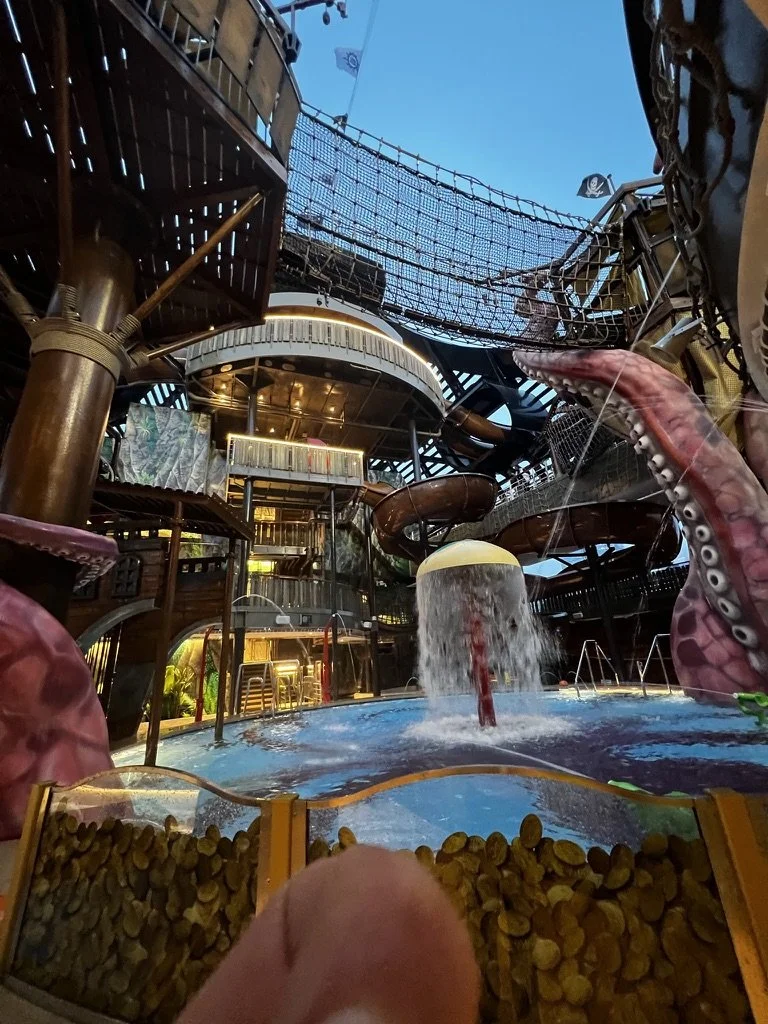
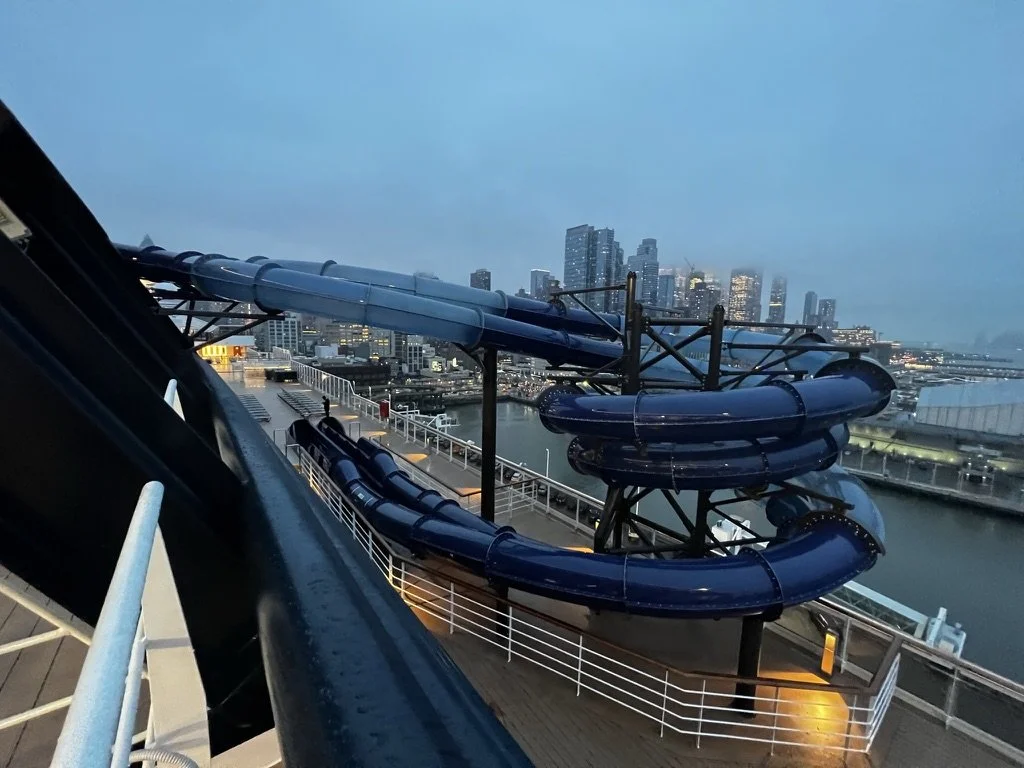
The waterparks across the Seaside class are among the most extensive at sea, and Seascape carries that forward in ways that keep kids occupied long enough to actually give parents a vacation.
The kids club programming — Doremiland — runs through two major brand partnerships that signal how seriously MSC takes this part of the product. The LEGO partnership covers ages 3 through 11 with dedicated club spaces, building challenges, and a Junior LEGO Master Builder diploma kids can earn on board. The Chicco partnership covers the youngest travelers from six months up, with a play space designed for that age group and staff-supervised drop-off during specified windows. For older kids there's a MasterChef Junior cooking competition and teen lounges running PlayStation 5, Xbox Series X, Nintendo Switch, and VR setups.
One detail worth noting: MSC's youth staff are required to be multilingual — a direct reflection of the international passenger mix on these ships. For a kid who ends up in a club room with children from six different countries, that matters more than it sounds.
Kids club access is included in Bella and Fantastica fares, which means families aren't paying a premium tier just to reach the programming. And as noted above, kids can be booked into Yacht Club rooms, so the enclave experience and the full Doremiland programming are available to the same family at the same time.
The MSC You Think You Know Isn't the One in Galveston
The reputation MSC carried into the North American market a decade ago was earned in a different era — a product built primarily around European sensibilities, with an onboard experience that felt foreign to American cruisers who expected something closer to what Carnival or Royal Caribbean delivered. My first MSC sailing, the muster drill announcements ran in seven languages.
That line still exists in traces, and I mean that as a compliment as much as a caution. MSC is an Italian line, family-owned and not publicly traded, and that identity shapes the experience in ways that are genuinely distinctive. But the evolution toward the North American market over the last nine years has been sustained and visible, and the results show on board.
The most significant change has been dining — more on that below. The other measurable shift is the passenger mix itself. The international European crowd is still there, and it's part of what makes MSC feel different from a Norwegian or Royal Caribbean sailing, but Americans are filling significantly more bunks than they were nine years ago. That shift has made the product more accessible to first-time MSC cruisers without stripping what makes it worth sailing.
Because MSC is family-owned and not publicly traded, they can structure pricing in ways the publicly traded lines simply can't. That means genuinely low intro fares, sometimes bundled with drinks and Wi-Fi, at price points the competition struggles to match. The value is real. The ships and experience are more than the price suggests — which is part of why the right tier decision matters so much. You're not buying a budget experience. You're buying into a tiered product where the entry point is priced aggressively and the upper tiers deliver at a level that surprises people.
The Food: North American Diners Have a Love/Hate Relationship With MSC
And in my experience, most of it traces back to setup rather than quality.
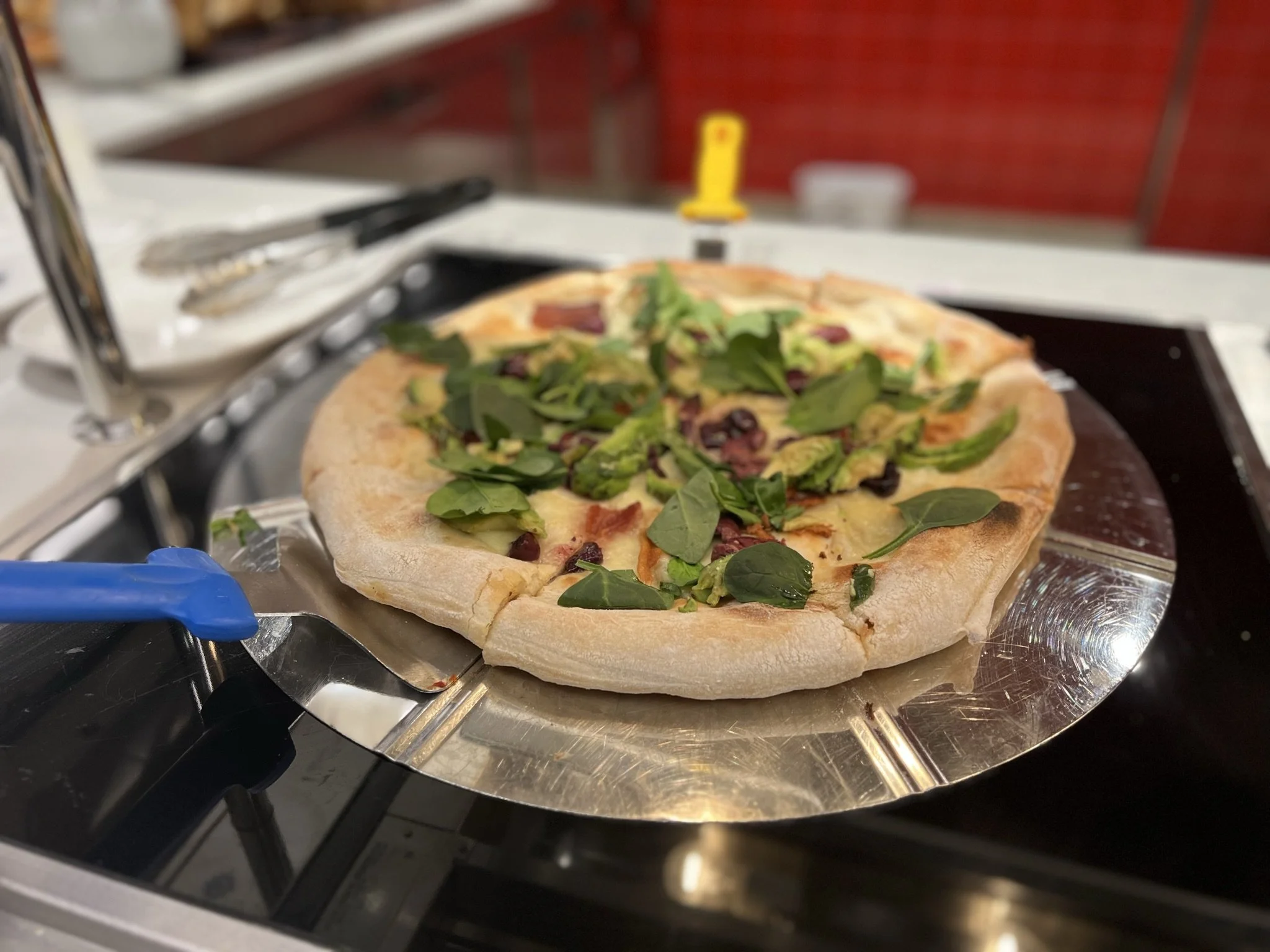
The pizza is the best at sea — and I'll be honest, Seascape was the first place I'd ever heard of breakfast pizza. It's exactly what you want it to be. The buffet is pasta-forward and authentically Italian in a way that genuinely distinguishes it from the American-leaning spreads on most other lines. The main dining room is solid, though the seasoning profile skews European rather than the American-leaning menus you'll find on Carnival or Royal Caribbean. Different, not bad, but worth knowing before you board.
MSC made a genuine effort to Texas-fy the Seascape dining experience for Galveston sailings — brisket on the MDR menu, Tex-Mex at breakfast, BBQ nights, Southern-inspired cocktails. The intent is right and the effort is real, though true Texans may recognize it as a Northerner's interpretation. Your brisket benchmark lives somewhere on I-35, not on the Lido deck. It's a better gesture than most lines would make, and the direction is right even if the execution has room to grow.
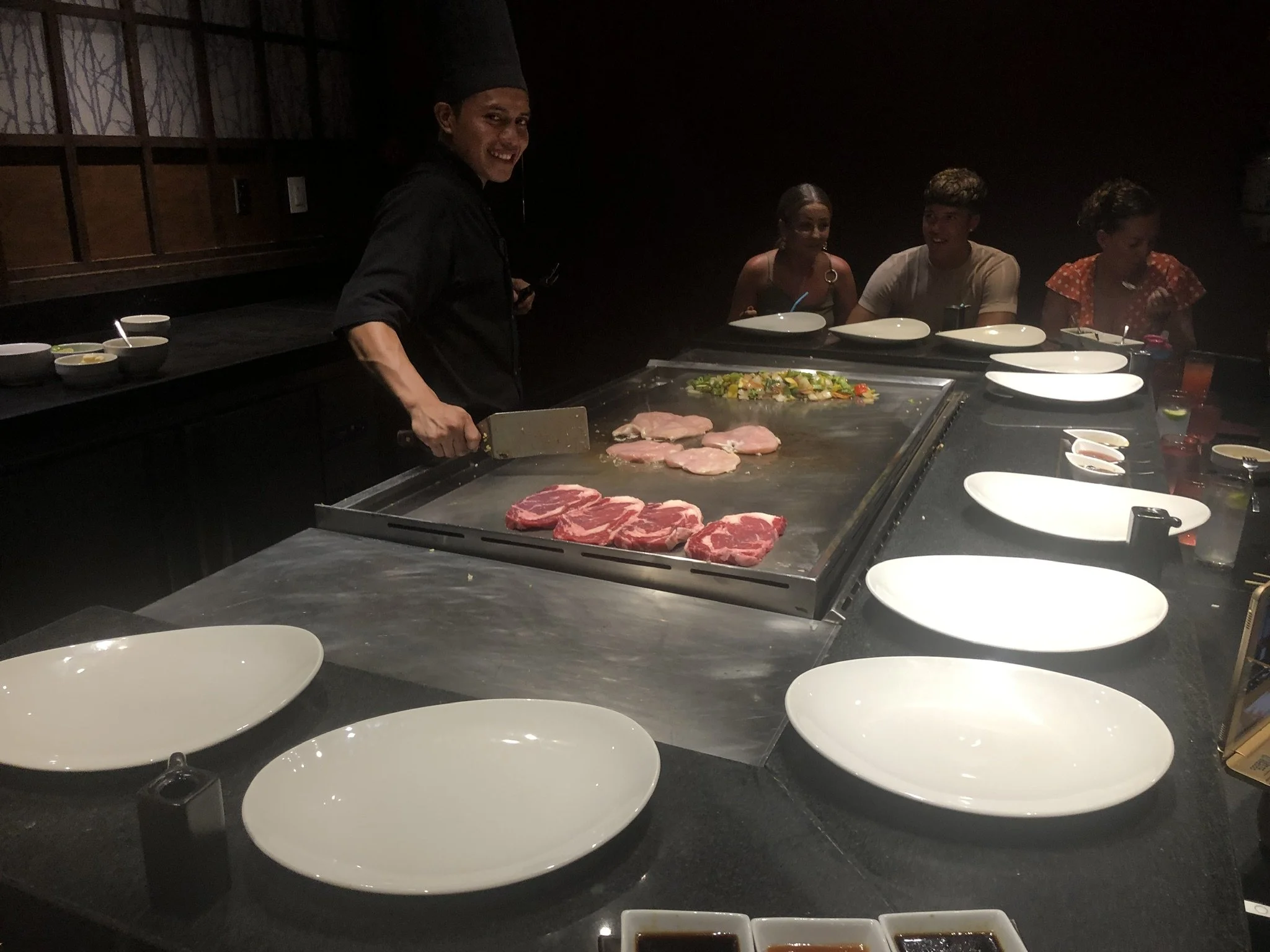
The specialty dining program is where MSC's culinary reputation gets fully redeemed. I've done the steakhouse, the teppanyaki, and the Asian restaurant personally — more than once — and I'd recommend all three without hesitation. These are genuinely good restaurants that compete with specialty dining across the major lines.
The three-night specialty dining package, discounted at the time of booking and not available at that price afterward, is the single decision that most separates satisfied MSC diners from disappointed ones. For Bella and Fantastica guests it buys both quality and flexibility that their fare tier doesn't fully provide. For Aurea guests it's an enhancement rather than a gap-filler, since anytime dining in the dedicated MDR section is already a solid baseline. Either way: book the package when you book the cabin. That price doesn't follow you to the pier.
Loyalty, Status, and the Casino
MSC pioneered the status match concept in cruise loyalty — if you've earned status on another line, MSC will match it, giving you a starting point in their program before you ever sail with them. That's a genuine industry first and a real entry point for cruisers who've built loyalty elsewhere.
The program has nuances worth understanding. Reaching the top loyalty tier is structured around revenue rather than number of sailings, which rewards high-spend occasional cruisers differently than it rewards frequent budget travelers. Depending on how you cruise, that structure either works in your favor or it doesn't — worth knowing before you build expectations around it.
On the casino: across Carnival, Royal Caribbean, Norwegian, and MSC, MSC's casino has been the friendliest jackpot-wise in my experience. The casino rewards and points program, however, trails what the other major lines have built. If casino loyalty is part of how you evaluate a cruise line, that tradeoff deserves a conversation before you book.
The Booking Reality
This is the section I'd want every prospective MSC client to read before we talk pricing.
MSC rewards people who know it. When the booking is structured correctly from the start — right tier for the right traveler, dining package locked in, cabin preferences addressed before the deposit clears — the experience delivers at a level that genuinely surprises people who came in with the old reputation in mind.
The policy infrastructure, however, assumes everything goes right. Changes and questions — the moments when you need the system to flex — are where the experience diverges sharply from other lines. MSC adheres to written policy with fewer exceptions than most, and their booking platform reflects that same rigidity.
The patterns I've seen most consistently involve modifications after booking. Adding travelers, removing them, adjusting arrangements that seem straightforward — situations that other lines handle with a phone call and a fare adjustment can become a cancel-and-rebook on MSC, or result in unintended reservation changes that limit pre-cruise purchases or require extended calls with escalations to untangle. Many MSC deposits are refundable, which makes the cancel-and-rebook route less painful than it sounds, but it's still friction that a correctly structured original booking avoids entirely.
I could tell stories. I won't. What nine years has taught me is that the work happens before boarding, not after. Get the tier right. Get the dining package. Get the cabin selection handled. Know who to call if something changes. That's the difference between the client who comes home raving about MSC and the one who swears they'll never sail it again — and both of them were on the same ship.
The Bottom Line
Seascape is sitting in Galveston right now, sailing seven-night Western Caribbean itineraries every Sunday. It's a beautiful ship on a line that has earned a more serious look from the North American market than its reputation sometimes gets.
My recommendation: if you fit the profile above, MSC belongs on your short list. If you're not sure whether you fit the profile, that's exactly the conversation I'm here to have before you book.
— Billy Miller Travel Group | (817) 386-7086 | billy@millertravelgroup.com #WhyStayHome

Billy Miller is the founder of Miller Travel Group. He believes true vacation planning requires real human relationships and actual local expertise—which is exactly why he is rarely found sitting at home. He writes about premium travel, cruise industry realities, and destination hidden gems from a deeply personal, experiential perspective.